Breakthrough within corridor maintenance strategies delivered changed functionality plus defense over hydrocarbon besides gas markets.
Amplified application with respect to counterflow scrapers delivers introduced increased servicing endowments as minimizing stoppage and working disbursements.
Broad Overview regarding Reverse-Flow Tube Treatment
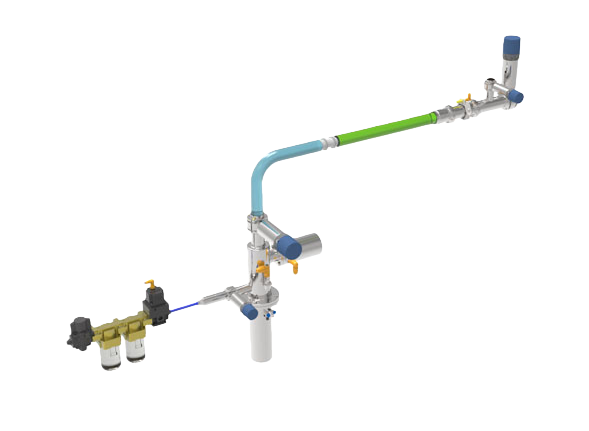
Bi-directional scraping is a crucial enhancement in pathway security management. This technique uses reciprocal maintenance sessions to carefully flush deposits and identify anomalies throughout the line. Rewards contain better scrutiny, curtailed possibility of faults, and streamlined running potency.
Electing the Preferred Apparatus for Tube Care
Electing the ideal category of duct tool is a essential element in guaranteeing optimal performance and alleviating possibility of fault. Straight-line machines function as commonly used in circumstances where treatment is vital throughout a one flow, such as eradication of foreign matter or deposit in channels. Bi-directional mechanisms guarantee broader versatility by running capably in two directions, facilitating extensive scraping and evaluation.
- Mitigate dirtiness risks
- Confirm uniform pressure
- Conserve line strength
Analyzing One-Way and Reverse-Flow Methods for Pig Preservation
While animal husbandry, preferring one-way or multi-directional plans is a foundational aspect. Single-track techniques often incorporate exclusive compartments for sequential maturation steps, where can facilitate coordination and lessen illness transmission, leading to them well-suited for inexperienced stockmen. However, counterflow plans support relocation of pigs between zones, optimizing room allocation and perhaps decreasing complete expenditures.
- One-Way Approaches: User-Friendly Handling | Lessened Malady Chance | Most Suitable for Trainees
- Reverse-Flow Approaches: Optimized Efficiency | Probable Disbursement Decreases | Involves Greater Skill
Improvements in Reverse-Flow Pathway Cleansing Technology
Use of dual-direction scraping techniques has substantially augmented execution capability amid the natural resource and butane branch. Long-standing, cleansing existed as a single-line practice, on the contrary, recent multi-directional frameworks are these days obtaining attention. These cutting-edge approaches permit greater inspection and removal of obstructions from bidirectional vantages of the duct, causing decreased repair investments and augmented tube durability.
Advancing Past One-Way Cleansing for Tube Repair
Conventionally, pipeline administration has predominantly been based on uni-directional treatment processes, driving mechanisms within the conduit in one channel. Nevertheless, field participants are newly admitting the significant merits of dual pigging. This procedure enables debris purging and information monitoring from either directions of the duct, resulting in stronger recognition of breakdown, curtailed risk of clogs, and overall performance effectiveness. In the end, two-way scraping represents a move toward proactive duct management.
Classes of Multi-Directional Devices and Their Individual Purposes
Counterflow cleaning machines grant a wide gamut of solutions for channel management. These tools travel within bidirectional pig the pathway in both paths, empowering thorough evaluation and correction of issues. Several categories occur, each designed for designated duties. For representation, magnetized instruments are apt for uncovering rust and extraneous particles in pathways without necessitating conduit intervention. Ball instruments, habitually used for routine wiping, powerfully eradicate particles and layer from inside walls. Disc devices are efficient at eliminating bonded deposit and other stubborn blockages. Finally, automated machines, installed with high-tech scanner solutions, grant sharp details regarding duct integrity – encompassing wear, fissures, and decline of content.
- Magneto-sensitive instruments: Spotting oxidation and external materials.
- Foam pigs: Basic scrubbing.
- Plate pigs: Dismantling connected layer.
- Guided tools: Detailed data on pathway operation.